
You are about to swap tokens on a decentralized exchange. The quoted price looks reasonable, the network fee is acceptable, and the transaction appears to be only a few clicks away. Then the wallet asks you to approve an unfamiliar contract. Is it a normal permission request, or are you handing over far more authority than intended? In DeFi, that distinction can matter more than the exchange rate.
This is where a wallet such as Rabby becomes useful—not because a browser extension can eliminate smart-contract risk, but because it can make the transaction’s proposed effects easier to inspect before a signature is produced. The important idea is not simply “download a wallet.” It is to compare two signing habits: trusting a website’s interface, or examining the transaction as a set of blockchain actions.
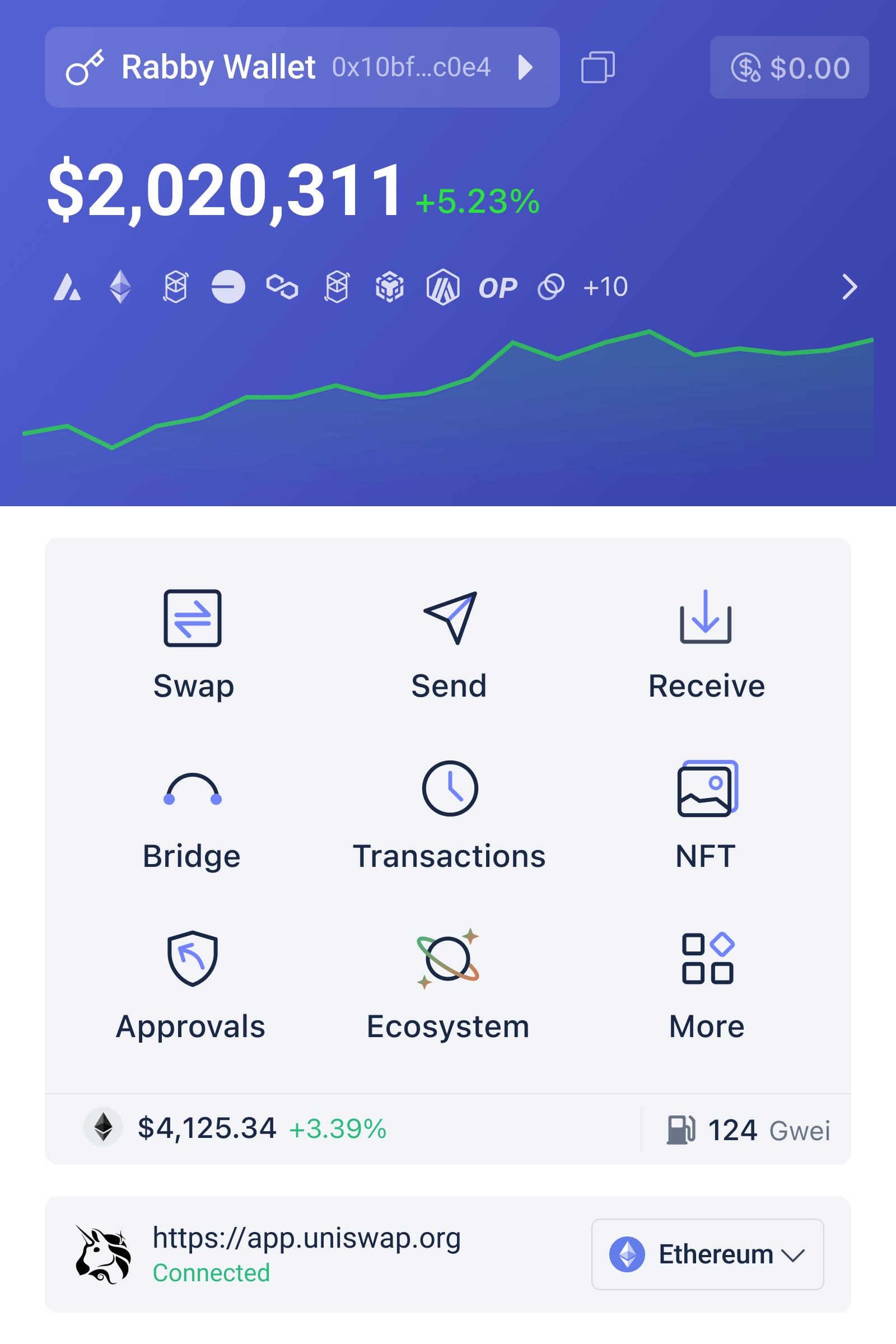
Two DeFi workflows, and why the difference matters
The familiar workflow begins on a decentralized application, or dapp. You connect a browser wallet, choose an action such as swapping, lending, or providing liquidity, and click confirm. The dapp constructs a transaction and sends it to the wallet. The wallet then presents information such as the destination contract, network, gas estimate, and requested signature. This approach is convenient, but it often leaves the user interpreting technical data under time pressure.
A second workflow adds a review layer before approval. A wallet may inspect the transaction’s intended contract call and simulate a likely outcome. Instead of seeing only a hexadecimal data field or a vague “interact with contract” message, the user may receive a more practical interpretation: which assets could leave the account, which tokens could arrive, whether an approval changes spending authority, and whether the call appears likely to fail.
For someone planning a rabby extension download, the distinction is worth understanding before installation. A browser extension is an interface and signing tool; it is not the blockchain itself, not a guarantee that a dapp is legitimate, and not a substitute for controlling the recovery credentials securely. The extension can help you evaluate a request, but the final decision still belongs to the signer.
The comparison is therefore less like “safe wallet versus unsafe wallet” and more like “unobserved execution versus inspected execution.” A conventional wallet may be perfectly capable of sending a valid transaction. A simulation-oriented wallet attempts to answer a different question first: if this transaction were executed against the current state of the network, what would probably happen?
What transaction simulation actually does
Transaction simulation is best understood as a preview, not a time machine. A node or wallet-related service can execute the proposed call against a representation of the blockchain state without broadcasting it as a settled transaction. The process checks how the smart contract code responds to the supplied inputs. Depending on the tool and network, the result may reveal expected token movements, a revert, a changed approval, or other effects that are more legible than the raw transaction data.
That mechanism improves the user’s mental model. A token swap is not merely a button labeled “Swap.” It is usually a contract call containing an asset, an amount, a recipient, a minimum acceptable output, and other parameters. An approval is not merely preparation for a later trade. It can authorize a spender to move a token on the user’s behalf, sometimes for a bounded amount and sometimes for a much larger allowance. Simulation and transaction interpretation help expose this difference.
There is a subtle but important limitation: the preview is conditional on the state used for the simulation. DeFi markets can change between simulation and inclusion in a block. Another transaction may consume available liquidity, alter a price, change an oracle value, or affect a contract’s state. A transaction that looks successful in a preview can still fail later, while a simulation that reports a likely result cannot prove that the contract is economically sensible.
Simulation also does not necessarily identify every form of danger. A malicious contract can produce an execution that technically succeeds while transferring assets under terms the user did not understand. A price may be manipulated after the preview. A token may have unusual transfer behavior. The interface itself could be compromised, or the user could be viewing the wrong network. “Simulation passed” should therefore be read as “the proposed call appears executable under these conditions,” not “the transaction is safe.”
Rabby extension download: practical checks before the first signature
Installation is a security decision, not just a software task. US users should obtain a wallet extension from a source they can independently verify, check that the browser permission request is sensible, and avoid entering a recovery phrase into a webpage, support form, or pop-up. A genuine wallet will not need the secret phrase to “synchronize” funds through an untrusted site. The phrase is the authority to recreate the wallet, so anyone who obtains it may be able to control the assets.
After installation, compare the account address shown in the extension with the address you intend to use. Confirm the network before interacting with a dapp, because a familiar token symbol on one chain does not mean the same asset or liquidity exists on another. For a first test, a small-value transaction can reveal whether the account, network, and signing process are configured as expected without placing a large balance at risk.
When a transaction appears, look beyond the gas fee. Ask four questions: What contract is receiving the call? Which assets may leave? What authority is being granted? What happens if the market moves before confirmation? These questions are more reusable than memorizing a list of “good” and “bad” wallet messages. They turn a wallet from a passive approval window into a checklist for interpreting programmatic money movement.
Which approach fits which user?
A minimal wallet workflow may suit an experienced user making frequent, familiar transactions on a well-understood protocol. Its advantage is speed and a smaller amount of interface friction. The cost is that the user must supply more of the interpretation themselves, especially when the dapp’s presentation is incomplete or misleading.
A simulation-heavy workflow is generally more valuable when the transaction is unfamiliar, the value is substantial, the contract is new, or the action involves an approval, signature, bridge, or liquidity position. Its advantage is additional context before signing. Its cost is that users may place too much confidence in a readable preview, treat warnings as definitive judgments, or become desensitized when every transaction displays technical detail.
The best practical rule is proportional review. Spend more time examining a transaction when the potential loss, contract complexity, or uncertainty is high. For a routine action, verify the recipient, asset, amount, and network. For an approval or unfamiliar protocol, inspect the spender and allowance carefully, consider limiting permissions where the interface supports it, and avoid signing if the expected outcome cannot be explained in plain language.
There is also a boundary around user interface improvements. A wallet can reduce accidental signing, but it cannot repair poor private-key custody, guarantee a protocol’s solvency, or determine whether a yield opportunity is economically rational. It cannot make an illiquid token liquid or turn an unaudited contract into a trusted one. The tool’s value lies in improving observability—the ability to see what a transaction is attempting—not in removing the need for judgment.
What to watch as DeFi wallets evolve
If wallet developers continue improving transaction interpretation, the useful direction is likely to be more precise context rather than louder warnings. Better systems would distinguish an approval from a transfer, show the relationship between a dapp and its contracts, explain failed calls in ordinary language, and make changes in allowances easier to track over time. These improvements would matter most if they remain transparent about uncertainty and show users the assumptions behind a simulation.
The open question is whether clearer previews change behavior or merely create a new layer of familiar-looking prompts. That depends on design, user education, and the quality of the underlying data. For now, the durable lesson is simple: use simulation as evidence about a proposed execution, then combine it with address verification, permission awareness, and sensible position sizing. A wallet extension can make the decision better informed. It cannot make the decision for you.
FAQ
Is transaction simulation a guarantee that a DeFi transaction is safe?
No. It is a conditional preview of how a call may behave against a particular blockchain state. Market movements, state changes, malicious economics, token behavior, or an incorrect dapp can still create risk. Treat simulation as a review aid, not an approval certificate.
What should I check before signing through a browser wallet?
Confirm the network, contract destination, asset and amount, expected result, and any approval or spending authority being granted. If the request is unfamiliar or the result cannot be explained clearly, pause rather than signing first and investigating later.
Is a browser extension enough to protect a DeFi account?
No. The extension can improve transaction visibility and signing control, but account security also depends on recovery-phrase protection, device security, correct website selection, and cautious protocol use. Larger balances may justify additional custody controls, including a hardware signing device.
