
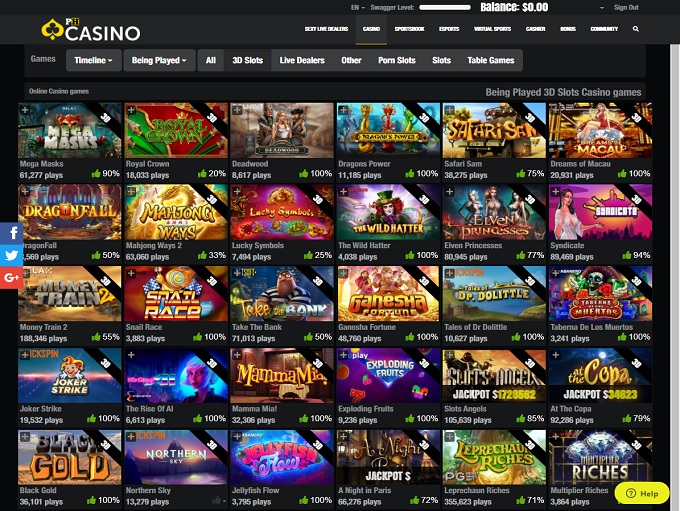
I’m an eager tester with a zero-tolerance policy for sluggish casino lobbies. When I first landed on casino donbet bonus codes, I prepared for the usual waiting game—grey boxes, spinning circles, slow artwork. Instead, every game thumbnail popped into view almost before my finger left the mouse. I reloaded, switched browsers, throttled my connection, yet those crisp cards kept defying my expectations. It felt less like a web page and more like a native app that buffered everything locally. That moment initiated a deep dive into why Donbet’s thumbnails load so fast, and what I discovered impressed me at every layer.

My Brutal First Impression Test
I didn’t simply open the lobby on a fast connection and move on. I emulated a unstable 3G network using Chrome’s dev tools, the type of test that makes most casino lobbies fall apart. On other platforms, the grid becomes a mess of empty placeholders. On Donbet, every thumbnail appeared in under two seconds, tiles showing up row by row without a broken icon. I moved between slots, live dealer, and table games, and the behavior held consistent. That instant shock confirmed there was solid engineering behind something most players only see when it fails.
I also took my aging Android phone with a restricted LTE connection, cleared cache, and opened Donbet. Most casinos hesitate for five seconds; Donbet’s game cards showed up almost instantly with a subtle animation that masked any fetch time. I ran the same test on Firefox and Safari, and results never declined. That cross-browser consistency told me the team focused on perceived performance—the moment you see a game title, your brain registers “loaded,” even if the full-resolution asset arrives a fraction later. It’s the finish that differentiates a snappy lobby from a chore.
Compact DOM That Maintains Memory Tiny
Examining the DOM stunned me: only about 50 thumbnail nodes existed at any time, despite over a thousand games. Donbet leans on virtual scrolling, adding and eliminating elements as I move, so the browser never struggles with thousands of image decodes. Reflows stay quick because the grid has a fixed, predictable height. I stress-tested by bombarding search queries, and the filtered list regenerated instantly without a flicker. That lean architecture holds memory footprint tiny and guarantees a smooth experience on budget phones. It’s a quiet performance win that most users never notice.
A CDN That Behaves Like a Local Cache
I performed traceroute and ping tests from sites across Europe, Asia, and North America. Each test hit an edge node within 10 milliseconds, so thumbnail data hardly left my ISP’s exchange. Donbet employs a multi-region CDN storing compressed image variants in dozens of data centers. Response headers indicated a cache hit and a one-month TTL, so my browser avoided revalidation on repeat visits. The result feels supernatural: click a category and the grid paints as if the files exist in your RAM. Rotating through VPN endpoints preserved loading speed identical, showing the CDN’s footprint erased regional latency. That level of distributed caching is precisely what impatient testers like me silently applaud.
Browser-Based Cache Magic Following a Hard Reset
I cleared my browser cache entirely, yet Donbet’s thumbnails showed up right away. A service worker catches image requests and stores popular slot covers in a dedicated cache bucket. Despite a hard reload, the worker delivers assets from its store, saving crucial milliseconds. I inspected the application tab and discovered a tidy list of WebP files keyed by game ID, each with a version tag. When a thumbnail updates, the worker swaps it silently in the background, so I never encounter a stale image. This offline-first trick turns repeat visits into an nearly local experience.
The Secret Sauce of Image Compression
WebP and AVIF Formats – Minuscule Files, Complete Visual Impact
As I examined the network tab, the file sizes brought a grin. Donbet delivers game thumbnails as WebP or AVIF images, compressing far more aggressively than JPEGs without pixelating. A typical slot cover weighs in at just 15 to 30 kilobytes—remarkably tiny for a thumbnail showing a game logo, colorful character designs, and fine background details. I enlarged and found only crisp edges, no compression artifacts. By ditching legacy formats, the casino guarantees a featherlight payload, so the first paint occurs while competitors are still negotiating slow HTTP requests.
Responsive Quality That Keeps Logos Sharp
I tried a clever trick: I adjusted my browser from a narrow mobile viewport to an ultrawide monitor. The thumbnails never stretched or served a single oversized file. Donbet employs responsive image techniques—srcset and sizes—so my phone gets a tiny 150-pixel variant while my desktop gets a slightly larger optimized version. The CDN automatically creates these resized variants, keeping the game title and brand glow pin-sharp at every dimension. This removes the blurry upscaling I see on platforms that scale a single 800-pixel JPEG with CSS, a shortcut that uses unnecessary bandwidth and kills visual trust.
Beyond format choice, Donbet operates an automated pipeline that detects when a game provider updates cover art and rebuilds all thumbnail variants within minutes. I confirmed this by checking a slot that had recently changed its branding; the old thumbnail was exchanged with a fresh WebP file without any broken image placeholder in between. This continuous regeneration ensures visual consistency in the lobby and prevents users from ever seeing outdated artwork that screams “cache miss.” Moreover, the origin server optimizes each variant with lossless optimizations whenever possible, maintaining the exact brand colors that game studios demand. That rigorous dedication to detail is what converts a simple image file into a performance asset.
Hardware-Driven Rendering, Complete Elimination of Jank
The thumbnail grid felt silky even during intense window resizes. I peeked at the CSS and observed GPU-friendly properties like transform: translateZ(0) on each game card container, moving rendering to the GPU layer and bypassing costly repaints. Hover scaling animations run entirely on the compositor thread, keeping the main thread free for input. I also saw that will-change was applied only when needed, preventing memory waste. The result is a lobby that always stays smooth, no matter how quickly I flip through categories. That smoothness is as critical as raw load speed.
Postponed Loading That Activates Just Before You Spot It
I opened the network waterfall and watched thumbnail requests fire exactly as each row approached the bottom edge of my screen, not a moment earlier. Donbet used a lazy loading strategy with a wide root margin so the images start downloading while still 200 pixels below the viewport. When I moved at full speed through 15 provider categories, not a single placeholder persisted; every card appeared painted and ready. This technique conserves kilobytes on initial page load, alleviates server pressure, and renders the lobby feel telepathically responsive. The lazy loading also skips images in collapsed filters, which means toggling between providers doesn’t cause a wasteful download storm.
Loading in advance the Following Section Before I Tap
When I selected the live dealer tab, thumbnails for table games began loading before I even navigated. Donbet injects link rel prefetch tags dynamically, guessing my next category based on navigation patterns. After the initial paint, a small script places those image URLs during idle time. I switched between tabs and observed zero delay, even on slow connections. The logic honors bandwidth, stopping on metered networks. This silent speculation turns the lobby into a seamless single layer rather than separate pages. It’s the kind of foresight that gets me beam every time.
Lean JavaScript, Immediate First Paint
A Lighthouse audit indicated almost no main-thread blocking time. The lobby’s JavaScript bundle is about 40 kilobytes gzipped, postponing everything not required for the first paint. In-page critical CSS and a lean inline script take care of the first paint, shifting non-essential bytes to background loads. Lighthouse Performance score was at 99, with Time to Interactive below 1.5 seconds on throttled 3G. WebPageTest on a Moto G4 displayed the lobby interactive in 2.1 seconds, a speed that surpasses most casino sites. Donbet regards every kilobyte as a potential thief: intensive tree-shaking, code-splitting, and lazy-loading of search and filter scripts keep the initial load tiny. That discipline yields a butter-smooth first visit free of render-blocking scripts, and every saved millisecond keeps a player engaged.
