
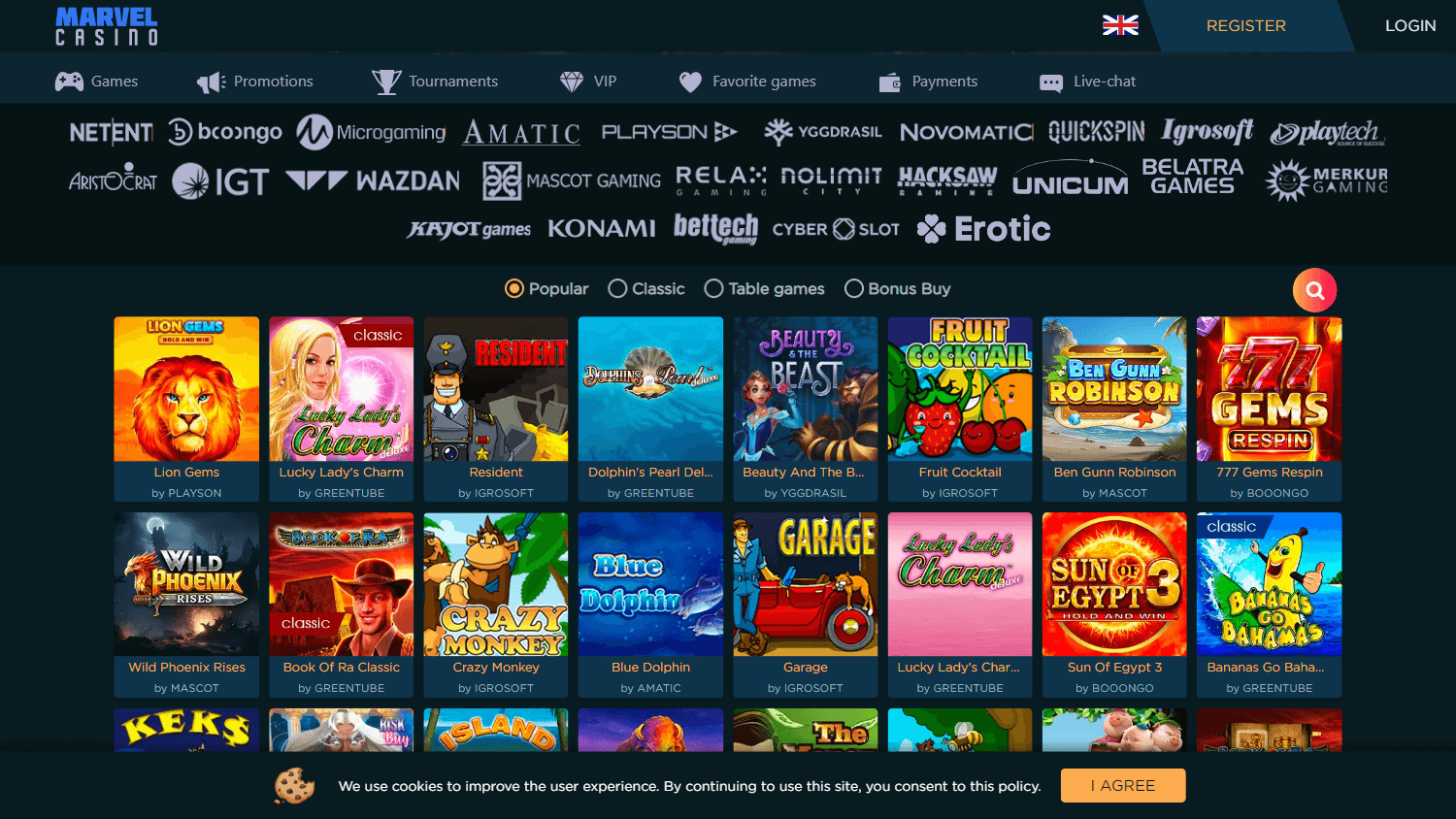
In the evolving landscape of online gaming, features that improve user control and personalization often signal a significant step forward. We have noted the introduction of a dedicated Wishlist function at Marvel Casino, a feature that transcends simple novelty to offer tangible organizational benefits for players. This analytical review analyzes the mechanics, implications, and strategic value of this new addition. By enabling users to choose their preferred games, the platform transitions from a model of passive discovery to one of active collection, streamlining the user experience. For an audience that appreciates efficiency and personal choice, this tool constitutes a thoughtful integration of player-centric design into the digital casino environment, vowing to reshape how games are accessed and enjoyed. This move indicates a deeper understanding of modern user behavior, where customization is not a luxury but an expectation, even in entertainment-focused platforms.
The Breakdown of the New Wishlist Feature
The Wishlist at Marvel Casino operates on a straightforward yet powerful principle: it serves as a personal repository for games. In practice, it enables a user to bookmark any title from the extensive game library with a simple click, usually on a star or heart icon adjacent to the game thumbnail. These saved games are then gathered into a dedicated list, available from the user’s account profile or a separate navigation tab. Importantly, this list is persistent across sessions, ensuring your selected selection remains intact between logins. From an analytical standpoint, the feature’s utility is in its ease and reliability. It removes the friction of browsing through numerous titles again, essentially creating a customized game lobby. This direct approach to individualization tackles a common pain point in large-content platforms—information overload—by providing the user the ability to sort and order content based on their own likes. The technical execution is flawless, with no noticeable lag when adding or taking away items, and the graphical design is simple, ensuring the feature is findable and practical even for those not as technologically proficient. This thorough attention to detail in the user interface is what elevates it from a basic bookmarking tool to a central component of the site’s navigation architecture.
Strategic Benefits for the Discerning Player
For the tactical player, the Wishlist is beyond a useful tool; it is a tool for improving gameplay and organizing time and resources https://marvelcasino.eu/en-au/. The primary benefit is the substantial reduction in decision fatigue. Instead of browsing through the entire catalog, a player can instantly access a shortlist of pre-selected games they already know they like, enabling for extra time spent playing and reduced time browsing. Furthermore, the list serves as an superb financial management aid. Players can set aside high-stake slots or intricate table games for later, aligning their play with their bankroll strategy. It also enables comparative analysis; keeping potential games side-by-side in a wishlist makes it more convenient to evaluate their RTP percentages, volatility, and bonus features before investing real funds. This degree of organization promotes a greater deliberate and controlled gaming approach, which is a cornerstone of responsible play. Additionally, the Wishlist can function as a research tool during promotional periods. A player can assemble a list of games eligible for a specific free spins offer or deposit bonus, enabling them to swiftly switch between them to evaluate which game yields the optimal results under the promotion’s terms, thereby enhancing potential value from casino incentives in a organized manner.
Boosting User Experience and Platform Engagement
From a user experience (UX) viewpoint, the addition of a Wishlist is a sophisticated move that boosts platform stickiness. It fosters a sense of ownership and investment in the platform, as a user’s curated list becomes a personal digital asset. This psychological investment can lengthen session length and frequency, as coming back to a personalized environment is intrinsically more appealing. The feature also streamlines exploration. A player might add a new, intriguing game to their Wishlist to try later while carrying on their current session uninterrupted, effectively creating a “play later” queue. For the platform, this leads to deeper engagement with the full breadth of the game library, as players are more likely to explore beyond their usual two or three titles when they have a risk-free way to bookmark discoveries. It changes the casino from a venue of chance into a curated entertainment hub. Moreover, this curated approach lowers bounce rates; a player who logs in and sees a known, personally-selected set of games is more likely to initiate a playing session than one who is confronted with an impersonal, ever-changing homepage. The Wishlist thus develops user habit and loyalty through convenience and personal relevance, which are key metrics for long-term platform success in a competitive market.
A Comparative Examination of Industry Standards
When we place Marvel Casino’s Wishlist against broader industry options, its value grows clearer. Whereas some competing platforms provide “favorite” systems, they are often basic, lacking staying power or proper structure. A robust Wishlist, as applied here, follows trends found in leading e-commerce and entertainment streaming services, where user curation is essential. It accepts that modern consumers expect a tailored experience. The feature’s seamless incorporation, without intrusive notifications or restrictions on the number of items, creates a high benchmark. It suggests the platform’s development is focused on long-term user satisfaction rather than short-term engagement metrics. In a market where game libraries are often equally vast, such quality-of-life features become a key distinguisher, providing a competitive lead that resonates with experienced players who emphasize a smooth, efficient interface. For instance, some casinos only allow favorites to be added from within the game lobby itself, not from search results or promotional pages, creating a fragmented experience. Marvel Casino’s implementation looks omnipresent, allowing curation from any point of discovery. This holistic approach reflects best practices from digital retail, making it a forward-thinking addition rather than a mere check mark on a feature list.
Functional Scenarios and Application Cases

The practical applications of the Wishlist are diverse and cater to various player profiles. For the recreational player, it might serve as a list of three or four relaxing slot games for quick access. For the enthusiast, it could be a carefully organized collection separating high-volatility slots from classic table games. Particular use-case scenarios include tracking progressive jackpot games one desires to check regularly, or bookmarking games with particular bonus features for when a player has more time to play thoroughly. The list also serves as a perfect tool for defining gaming goals. A player might add a high-stakes poker variant to their Wishlist as a goal to work towards, employing it as encouragement within their broader bankroll management strategy. Its adaptability is its key asset. Beyond these, the Wishlist can be useful for social or shared experiences. A player discussing games with friends can quickly add recommended titles to their list for future trial, creating a individual backlog of community-vetted options. This transforms solitary browsing into a interactive, social activity even when playing alone, as the list becomes a repository of shared interests and recommendations.
- The Casual Replayer: Easily save and access your top three go-to games without any browsing, reducing friction and optimizing relaxation time.
- The Strategic Explorer: Bookmark games with advantageous RTP or specific features for future evaluation and play, building a library of verified, high-potential options.
- The Bonus Hunter: Tag games that are recognized to feature free spins or bonus rounds to capitalize on promotional opportunities, ensuring no bonus is wasted on an unsuitable game.
- The Goal-Oriented Player: Employ the list to set targets, like setting aside a high-limit game to play once a particular bankroll is attained, incorporating aspiration directly into the gaming interface.
- The Social Player: Gather a list of games endorsed by peers, building a personalized “to-play” list that boosts the communal aspect of online gaming.
Incorporation with Ethical Play Standards
A refined, often overlooked aspect of organizational tools like the Wishlist is their compatibility with safe gambling structures. By enabling pre-session organization, the feature fosters intentional play. A user who logs in with a plan to try particular games from their selection is less likely to fall into impulsive, unplanned gameplay that can lead to prolonged sessions or trying to recover. The Wishlist acts as a subtle organizational tool, assisting users adhere to their preferred games and spending caps. It encourages a thoughtful method where game selection is a intentional decision, not a arbitrary click influenced by flashy offers or landing page position. While not a primary ethical play tool in its own right, the mental setting it creates—one of control, order, and purpose—reinforces the wider principles of gambling responsibly and preserving a healthy attitude with playing as a mode of recreation. The act of selecting a list necessitates a instant of consideration, a pause between the impulse to play and the action itself. This micro-moment of consideration is a subtle but effective strengthening of mindful choice, which is a essential cornerstone of responsible gambling efforts. It empowers the user with structure, creating the playing environment seem more handlable and less intimidating.
The Next Phase of Tailoring in Online Gaming
The introduction of a Wishlist at Marvel Casino is expected to be a precursor to more sophisticated personalization features. We can expect future updates where such lists could be used to generate personalized messages—for example, notifying a player when a game on their Wishlist receives a new feature or when a progressive jackpot on a saved game hits a certain threshold. Data from Wishlist usage could also shape smarter, more personalized game recommendations, moving beyond generic “popular games” lists to “games similar to those on your Wishlist.” This evolution would constitute a shift from static personalization to dynamic, intelligent curation. The current feature establishes the essential groundwork, establishing user behavior patterns and showing a commitment to a player-centric model. It is a fundamental step toward an online gaming experience that appears uniquely tailored to each individual’s preferences and habits. Thinking further ahead, we might witness the integration of Wishlist data with player loyalty programs, offering special bonuses or free spins particularly for titles a player has saved, thereby deepening the personal connection. The potential for machine learning algorithms to evaluate Wishlist compositions to forecast and suggest new game releases a player would enjoy is another logical progression, converting the casino platform into a truly adaptive entertainment service.
In conclusion, the launch of the Wishlist feature at Marvel Casino is a substantial and well-considered enhancement that tackles core user experience needs. It provides strategic value to players by cutting time, helping bankroll management, and encouraging intentional play, while concurrently boosting platform engagement through personalization. By corresponding with both industry trends and responsible gaming principles, it shows a mature approach to platform development. This tool converts a vast game library from an overwhelming catalog into a workable, personalized collection, enabling players with greater control over their digital entertainment environment. As a feature, it is both realistically useful today and promising for the future evolution of customized online gaming, creating a benchmark for how player-centric design can create a more satisfying and sustainable gaming ecosystem for the Australian market and beyond.
