
A common misconception in DeFi is that a wallet is mainly a place to store coins and click “confirm.” That model is too shallow for today’s on-chain environment. A browser wallet is also a transaction interpreter, a permission manager, and a boundary between a user’s assets and applications that may be unfamiliar, compromised, or simply designed with aggressive authorization patterns. The practical question is not only whether a transaction succeeds. It is what authority the transaction grants, for how long, and to whom.
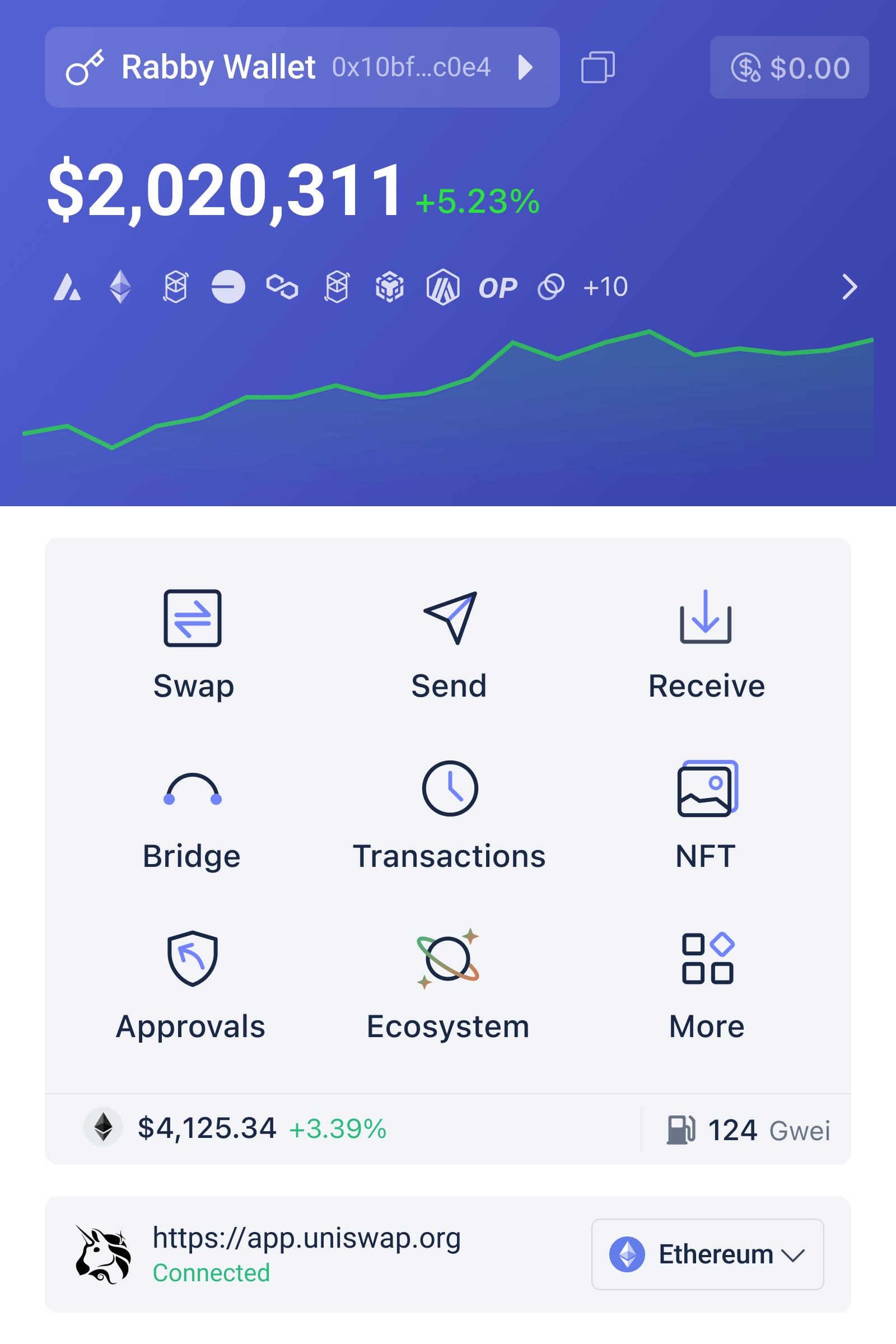
That is where Rabby Wallet and token approval management become especially relevant. The extension sits at the point where a user connects to decentralized exchanges, lending markets, bridges, NFT applications, and other protocols. Used carefully, a wallet interface can make hidden transaction details easier to understand. But no interface can eliminate smart-contract risk, phishing, malicious signatures, or user error. The useful mental model is therefore not “a safer wallet button.” It is “a clearer control panel for permissions that still require human judgment.”
How token approvals actually work
When a user swaps an ERC-20 token, the decentralized exchange contract usually cannot move that token directly from the wallet without authorization. The user first submits an approval transaction to the token contract. That approval records an allowance: a limit describing how many tokens a particular spender may transfer from the user’s address. A second transaction then calls the application, which may use the allowance to complete the trade.
This two-step pattern explains a frequent source of confusion. Approving a token is not the same as sending the token, but it creates a capability that may be used later. If the allowance is large, sometimes effectively unlimited, the spender may be able to move tokens up to that amount without asking for a new approval each time. The risk is not necessarily that the original protocol is malicious. It may be that a contract is later exploited, a spender address is misunderstood, or an approval remains active long after the user has stopped using the application.
Token approvals are also only one category of permission. NFT collections can use operator approvals that allow a marketplace or contract to manage multiple assets. Some newer signing systems use off-chain messages, including permit-style authorizations, which may not look like a conventional token transfer in the wallet’s confirmation window. In other words, “I did not send anything” does not always mean “I granted no authority.” A serious approval review must consider both on-chain allowances and the meaning of signatures.
Why the wallet interface matters
Wallet software cannot change the rules of a smart contract, but it can change how much of those rules the user sees before signing. A raw hexadecimal transaction is technically complete and practically opaque. A useful interface attempts to translate the request into recognizable actions: which chain is involved, which contract is being called, what asset may move, and whether the requested amount appears unusually broad.
That translation is valuable because DeFi transactions are composable. A single click in a front end can cause several contracts to interact, and the visible label may describe the user’s intention while hiding the permissions needed to execute it. A wallet that presents simulation results, contract information, asset changes, or warnings can reduce the distance between intent and execution. The distinction matters: transaction simulation is an aid to analysis, not a guarantee that the eventual transaction will be safe. State can change between simulation and execution, and a simulation may not detect every economic or governance risk.
For users preparing to install the rabby wallet browser extension, the security process begins before the extension is opened. Use a legitimate distribution path, check that the browser extension is the expected one, and treat requests for a seed phrase or private key as a decisive warning sign. A wallet extension should not need the secret recovery phrase merely to “verify” an account, unlock a promotion, or fix a transaction. In a US household or workplace where several people may share devices, browser profiles and operating-system access also deserve attention; a technically correct wallet setup is not private if another person can use the unlocked browser session.
Approval management is a lifecycle, not a one-time cleanup
Many users inspect approvals only after reading about an exploit. That is better than never checking, but it treats permission management as an emergency response rather than routine maintenance. A stronger process follows the lifecycle of an application: approve the minimum practical amount, use the protocol, review what remains, and revoke or reduce permissions that no longer serve a purpose.
There is a genuine trade-off here. Setting a small allowance can reduce exposure, but it may require another approval transaction later. Each additional transaction costs gas and creates another opportunity for a user to misunderstand what is being signed. An unlimited approval can be convenient and may be common in DeFi workflows, yet it creates a wider blast radius if the spender contract or its privileged components fail. Neither choice is universally correct. The appropriate decision depends on the asset’s value, the protocol’s trust assumptions, the chain being used, and how often the application will be revisited.
A practical heuristic is to match authorization scope to expected use. For a one-time interaction with an unfamiliar application, a limited approval is easier to justify than a broad, indefinite allowance. For a frequently used protocol with a long operating history, a user may rationally accept more convenience, but should not confuse familiarity with immunity. Review the spender address rather than relying only on a project name, and distinguish the token contract from the application contract. Similar names can create misleading confidence.
Revoking an approval is itself an on-chain transaction. It may cost network fees, and it does not undo transfers that already occurred. Nor does it repair a compromised private key. This boundary condition is important: approval management reduces one class of authorization risk; it does not substitute for key security, device hygiene, contract review, or skepticism toward unsolicited links. A wallet may identify a suspicious request, but it cannot know whether a user’s investment thesis is sound or whether a legitimate protocol’s economics will hold under stress.
The historical shift from address storage to transaction interpretation
Early cryptocurrency wallets were often judged by basic custody functions: generating addresses, signing transactions, and displaying balances. As DeFi expanded, that standard became inadequate. Users were no longer sending assets only to known counterparties. They were interacting with automated programs whose permissions, upgrade mechanisms, or dependencies could be difficult to inspect from a normal browser window.
The category has consequently moved toward interpretation. Modern wallet design increasingly tries to answer questions that block explorers and raw signing prompts leave unanswered: What will change in my balances? Which contract receives authority? Is this a token approval, a swap, an NFT operator permission, or a message with financial consequences? This is a meaningful evolution, but it also introduces a new dependence on the wallet’s data sources and detection logic. If labels are wrong, stale, incomplete, or unavailable on a newly deployed contract, a confident-looking interface can create false reassurance.
That is why experienced DeFi users should treat wallet warnings as evidence, not verdicts. A warning deserves investigation, but the absence of a warning is not a security certificate. The strongest workflow combines the wallet’s interpretation with independent checks: confirm the domain, compare the contract address with a trusted project channel, inspect the requested chain and asset, and ask whether the action matches the intended strategy. If the answer to the last question is unclear, stopping is a rational outcome.
What to watch as wallet security develops
The next phase of wallet design will likely be shaped by the gap between technical permission and human intent. Better simulation, clearer allowance dashboards, support for more signature standards, and warnings based on contract behavior could make routine decisions less error-prone. These improvements would be most useful if they explain uncertainty instead of turning every complex transaction into a simple green-or-red signal.
One conditional scenario is especially important. If DeFi applications continue to combine more contracts in a single user action, then transaction interpretation will become more valuable, but also more difficult. The winning security model would not be a wallet that promises to catch everything. It would be a layered process in which the extension identifies material changes, the user verifies context, and approval controls limit the consequences of a mistake. If interfaces instead prioritize speed and broad approvals without explaining authority, convenience may grow faster than user understanding.
There is no recent project-specific news available for the current or latest eligible week, so claims about new Rabby features or announcements should not be inferred from the absence of updates. The durable lesson is broader and more useful: wallet security is an ongoing practice, not a feature announcement. Users should watch how an extension handles new contract types, unfamiliar chains, signature requests, simulation failures, and allowance visibility over time.
FAQ: Rabby Wallet and token approvals
What is a token approval in DeFi?
A token approval is an instruction recorded by a token contract that allows a specified spender contract to transfer a stated amount of tokens from your address. It is separate from the later transaction that uses the allowance. If the allowance is larger than necessary or remains active indefinitely, the potential loss from a compromised spender can be greater.
Does revoking an approval make my wallet completely safe?
No. Revocation removes or reduces a particular allowance, but it does not protect against a stolen private key, a malicious signature, a deceptive website, a faulty protocol, or assets already transferred. It is a targeted control that should be combined with secure recovery-phrase storage, careful domain checks, and transaction review.
Should every approval be limited to exactly the amount of a trade?
Not necessarily. A precise allowance can reduce exposure, but it may require repeated approval transactions and additional fees. A broader allowance may be reasonable for a trusted, frequently used application, while a limited approval is often more defensible for a one-time or unfamiliar interaction. The decision should reflect value, frequency, trust assumptions, and network costs.
The sharpest way to think about Rabby Wallet is not as a substitute for attention, but as an instrument for directing it. DeFi users are not merely authorizing transactions; they are granting narrowly or broadly defined powers to software. Once that becomes the central mental model, token approval management stops looking like tedious cleanup and starts looking like ordinary access control—the kind that deserves review before, during, and after every serious interaction.
